
Pray Daily - KJV Bible & Verse
WOOMBITBooks & Reference
4.82.32K Reviews
- Version
- 1.30
- Installs
- 10.00M
- Age Rating
- Everyone
Screenshots

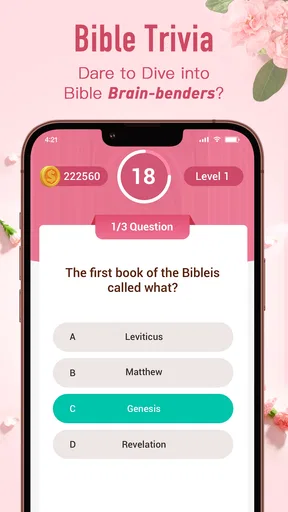
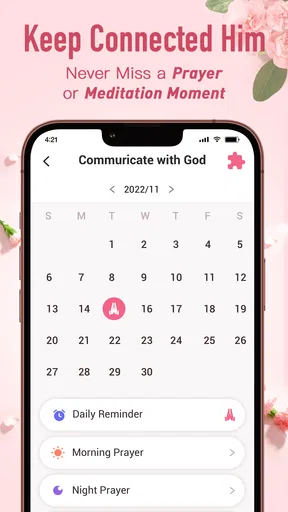

Our Review of Pray Daily - KJV Bible & Verse
 Analysis by Appyee
I approached Pray Daily - KJV Bible & Verse as someone looking for a simple way to bring prayer and Bible reading into an ordinary day, not as a replacement for a printed Bible or a personal faith community. After spending time with it, I found its appeal is in combining several small spiritual habits in one mobile space: daily prayer, Bible study, verse reading, and guided reflection. That combination makes it approachable when I have only a few quiet minutes.
The app comes from WOOMBIT and sits in the Books & Reference category. It is free to install, with optional in-app purchases ranging from $0.49 to $29.99 per item. Its Everyone age rating also makes the tone suitable for a broad audience, although the usefulness of its guidance will naturally depend on a person's beliefs, preferred Bible translation, and expectations of artificial intelligence.
What to expect when you open the app
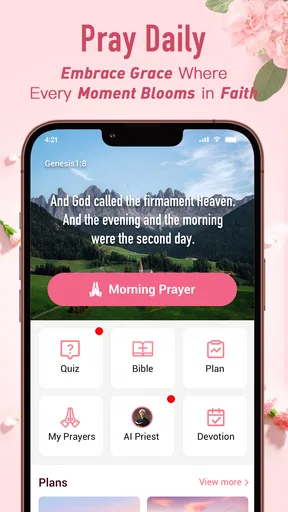
The first thing to understand is that this is not simply a verse-of-the-day reader. The central idea is a repeatable routine: open the app, spend time with a passage or prayer prompt, reflect on what it means, and return later when you want another moment of focus. The store summary describes daily prayer, personalized Bible study, AI-guided insights, and spiritual growth, and those elements give the experience a broader shape than a basic scripture lookup tool.
I found that distinction important because it changes how I use it. If I want to find a specific chapter quickly, a conventional Bible app may be faster. If I want a gentle starting point when I do not know what to read or how to frame a prayer, this app feels more useful. It gives the session a direction instead of leaving me staring at a large library and wondering where to begin.
The KJV focus will be a major factor in deciding whether the app suits you. Readers who appreciate the traditional language may find it familiar and meaningful. People who prefer contemporary translations could find the wording formal or occasionally difficult, especially during a short reading session when they want immediate clarity. I would not install this expecting a broad translation-comparison tool; I would install it for a devotional experience centered on the King James tradition.
The app has built a substantial audience, with an average rating of 4.8 from around 82 thousand ratings and more than 10 million installs. Those figures suggest that its straightforward approach resonates with many users, but they should not replace your own judgment. A highly rated devotional app can still feel too guided for someone who wants complete control over study topics, notes, and translation choices.
A realistic reason to use it every day
Imagine waking up late, checking your phone before work, and realizing you have not made time for prayer all week. With this app, I would not set out to complete an ambitious study plan. I would open the daily experience, read the selected material slowly, and use the prayer element to turn a vague feeling of stress into a specific conversation with God. Even a short session can feel successful if it ends with one thought I can carry into the morning.
That is where the app works best: as a low-friction doorway. It is especially suitable for someone who wants consistency but struggles with choosing a passage, deciding what to pray about, or maintaining a separate notebook and reading schedule. The guided structure reduces those decisions, which is helpful when attention is limited.
First setup: making the app fit your routine
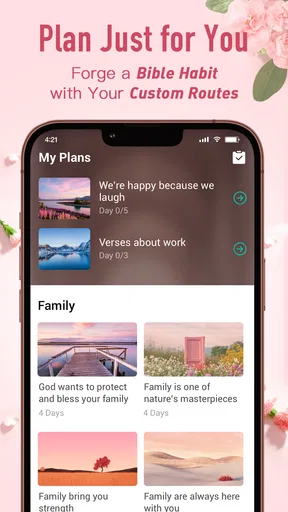
My advice is to approach setup with a clear purpose rather than trying to explore every option immediately. Decide whether your first goal is prayer, scripture reading, or a more reflective study session. Starting with one intention makes the opening experience less scattered and helps you judge whether the app is actually supporting your habit.
Because the app includes personalized study and AI-guided insights, I would also keep a healthy boundary around interpretation. Treat the guidance as a prompt for reflection, not as an authority that settles difficult theological questions. A useful response can help me notice a theme or ask a better question, but it should not replace careful reading, trusted teachers, or my own discernment.
It is worth checking how the app presents its optional purchases before settling into a routine. The core download is free, but some users may encounter paid items while exploring additional content or conveniences. I prefer to decide in advance whether I am comfortable staying with the free experience. That small step prevents an encouraging devotional moment from becoming an unexpected spending decision.
The current version is 1.30 and the app supports Android devices running version 5.0 or later. That broad compatibility is useful if you rely on an older phone, although the practical experience can still vary with screen size, device performance, and the way your phone handles notifications or background activity. I would install it on the device I actually use for quiet time, rather than assuming a larger tablet is necessary.
Choosing a time that is realistic
A common mistake is to connect the app with an overly ambitious promise such as never missing a day. I get better results by attaching it to an existing pause: after breakfast, during a lunch break, or before turning off the light. The goal is not to make the session impressive. The goal is to make opening the app feel natural enough that I can return tomorrow.
If mornings are chaotic, an evening prayer session may be more honest. If evenings are tiring, a short midday reading may work better. The app can provide the material, but it cannot solve a schedule that does not leave room for attention. I would rather use it for five focused minutes than rush through a longer routine while thinking about messages, errands, or work.
For families, the Everyone rating makes it easier to consider shared use, but I would still guide younger readers through the language and the AI-related elements. A parent or caregiver can turn a daily verse into a conversation rather than handing over the phone as a finished lesson. That approach preserves the app's convenience without making it responsible for the whole teaching experience.
Finding the first meaningful success
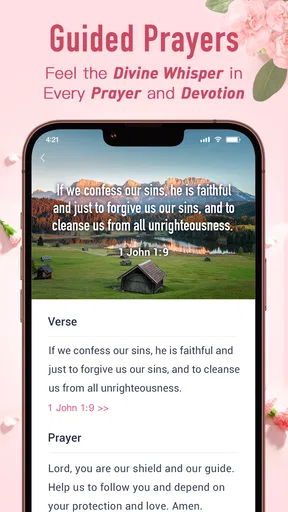
For a first session, I recommend a simple three-part workflow. Begin with the daily reading or prayer material, slow down long enough to identify one phrase that catches your attention, and then use the guidance to explore why it stood out. Finish by expressing one specific prayer instead of trying to cover every concern in your life. This gives the session a beginning, a point of reflection, and a clear ending.
The non-obvious benefit of this method is that it prevents the AI-guided section from becoming passive entertainment. If I ask for insight before I have personally considered the passage, I may simply accept whatever explanation appears. Reading first gives me something to compare against the guidance. I can notice where the suggestion helps, where it feels too general, and where I need a deeper source.
Another useful habit is to turn a broad theme into an action for the day. If the reading makes me think about patience, I might choose one conversation in which I will listen without interrupting. If it raises gratitude, I might name one person I usually take for granted and contact them. This is a stronger measure of value than how polished the app feels: the session should influence the way I live after I close it.
I would also avoid treating the daily material as a test. Missing a day does not make the next session pointless, and completing a session does not automatically mean I have understood a passage fully. The app is most helpful when it supports return and reflection, not when it creates guilt around an imperfect routine.
How the guided insights fit into study
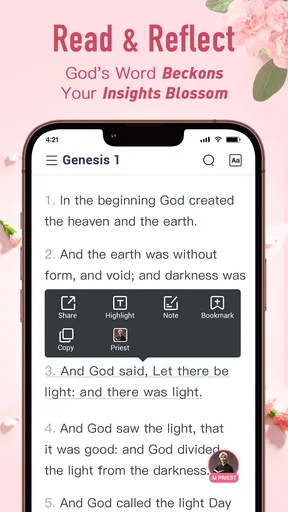
The AI component is best used as a conversation starter. I can imagine asking it to help me examine a theme, clarify the context of a phrase, or suggest a reflective question. Those are practical uses because they keep me engaged with the text. I would be more cautious about using generated guidance to make final claims about history, doctrine, or personal decisions.
This is one of the clearest trade-offs in the app. Guidance can make Bible study feel less intimidating, especially for a beginner, but convenience can also encourage shallow reading. I get the most from it when I pause after each suggestion and ask whether it is actually grounded in the passage. If a topic matters deeply to me, I would compare the insight with a trusted commentary, church resource, or conversation with someone knowledgeable.
That workflow also helps users who feel unsure about asking questions. Instead of trying to formulate a perfect theological prompt, begin with an honest observation: “This verse makes me feel hopeful,” or “I do not understand why this passage uses this image.” A personal observation usually leads to a more meaningful study session than a vague request for a complete explanation.
Common confusion and where the app may frustrate you
The first possible confusion is expecting a full-featured replacement for every kind of Bible software. This app is oriented toward devotional use, not necessarily toward the detailed research workflow of a study Bible with extensive cross-references, original-language tools, scholarly notes, and multiple translations. If those tools are central to your practice, a dedicated Bible study platform may be the better choice.
The second is assuming that personalization means the app will understand every part of your spiritual life. Guided prompts can feel relevant, but they are still generated within the limits of the information and context available to the system. I would not use the app as a substitute for pastoral care, counseling, or urgent personal support. Its role is to help me reflect, not to make sensitive decisions for me.
Some readers may also find the KJV wording slows them down. That is not a flaw for someone who specifically wants the King James Version, but it can be a real barrier for a newcomer. If a sentence feels obscure, I would look for a reliable explanation rather than guessing at its meaning. Users who want modern language as their default may be happier with an app built around contemporary translations.
There is also a practical tension between a calm devotional atmosphere and the commercial side of a free app. Optional purchases can be reasonable for users who want expanded access, but anyone seeking a completely distraction-free, no-purchase environment should pay attention during exploration. I would not let the presence of paid items determine the spiritual value of a passage, but I would make sure the payment model fits my expectations before recommending it to someone else.
Notifications can create another subtle problem if they become pressure rather than support. A reminder may help me remember prayer, yet too many prompts can make the practice feel like an obligation managed by a phone. I would keep only the reminders that genuinely help and silence them when they begin to interrupt rather than encourage reflection.
Who should use it, and who should choose something else?
I would recommend this app to a first-time devotional reader, someone returning to Bible reading after a long break, or a busy person who wants a guided daily pause. It is also a good fit for readers who enjoy traditional scripture language and appreciate having prayer and reflection in the same place. The free entry point makes it easy to test the routine without committing to a paid product immediately.
I would be more hesitant to recommend it as the main tool for a serious researcher, a reader who needs several translations side by side, or someone who wants extensive personal annotation and library management. Those users may prefer a conventional Bible app or a specialized study resource with more control. Likewise, anyone uncomfortable with AI-generated spiritual guidance should choose a simpler scripture reader and keep interpretation in human-led resources.
Compared with a printed Bible, this app offers convenience, prompts, and guided interaction, but it also introduces a screen and the possibility of distraction. Compared with a basic verse app, it offers a fuller routine instead of a single isolated quotation. Compared with a church study group, it is always available and private, but it cannot provide shared experience, accountability, or the wisdom of people who know your circumstances.
That comparison helped me place it correctly. I see it as a companion for personal practice, not a complete spiritual ecosystem. It can help me begin, return, and think more deliberately. It cannot replace community, mature teaching, or the slow work of reading an entire biblical book in context.
My next-step advice after the first week
After the first few sessions, I would review what is actually working. Am I opening the app because the routine helps, or only because I feel guilty? Are the guided insights leading me back to the passage, or am I skimming them without thinking? Do the KJV words deepen my reading, or do I need another resource to understand them? These questions reveal more than a quick first impression.
A useful next step is to keep one short note after each session: the passage, the main idea I took from it, and one action or prayer for the day. This creates continuity without turning the app into homework. It also exposes repeated themes and shows whether the daily experience is helping me grow in understanding rather than merely giving me a sequence of pleasant moments.
If the app becomes part of your routine, consider pairing it with one offline practice. Leave the phone aside for a minute of silence, discuss a passage with a friend, or read the surrounding verses in a physical Bible. That small separation between digital prompt and personal reflection keeps the app in its proper role and makes the experience feel less dependent on the device.
Overall, I found WOOMBIT's app welcoming for beginners because it reduces the uncertainty of deciding what to read and how to begin praying. Its strongest quality is the bridge it creates between a daily verse and a more intentional moment of reflection. Its main limitations are equally clear: the KJV style will not suit everyone, AI guidance needs discernment, and users wanting advanced study tools may outgrow the experience.
For someone who wants a free, approachable starting point for daily prayer and Bible reading, I think it is worth trying. I would begin with a modest routine, use the guided insights as prompts rather than final answers, and decide about optional purchases only after understanding how the free experience fits my needs. The best result comes when the app helps you pay closer attention, then gets out of the way so the reflection can become your own.
Verdict
Strengths of Pray Daily - KJV Bible & Verse
- Daily reminders encourage a consistent prayer and Bible-reading routine.
- KJV verses are presented in a familiar, traditional English translation.
- Simple navigation makes the app suitable for quick devotional sessions.
- Verse sharing tools make it easy to send encouragement to friends and family.
- Useful for offline reading when an internet connection is unavailable.
Limitations of Pray Daily - KJV Bible & Verse
- The KJV language may feel difficult for readers unfamiliar with older English.
- Frequent notifications can become distracting if not carefully scheduled.
- Personalization options may feel limited for advanced devotional users.
- Some features or content may require in-app purchases or advertisements.
- The app may not offer extensive study tools such as commentaries or concordances.
Other Releases by WOOMBIT
View All
Pray Alarm, Calendar & Bible
Lifestyle4.7

Holy Bible, KJV Bible + Audio
Books & Reference4.7

Bible Daily, KJV Bible + Audio
Books & Reference4.6
Similar Picks in This Category
View All
Google Play Books & Audiobooks
Google LLC4.7

네이버 - NAVER
NAVER Corp.3.5

Wattpad - Read & Write Stories
Wattpad.com3.7

King James Bible - Verse+Audio
Ozion4.8

Bible Offline-KJV Holy Bible
Bíblia Offline4.9

Amazon Kindle: Reading App
Amazon Mobile LLC4.8
Frequently Asked Questions
What is Pray Daily - KJV Bible & Verse?
Pray Daily - KJV Bible & Verse is a Christian devotional app designed to support daily Bible reading, prayer, and spiritual reflection. It typically brings together passages from the King James Version, inspirational Bible verses, prayer-focused content, and tools for building a consistent devotional routine. It may be useful for personal worship, quiet-time reading, or sharing encouraging scripture with friends and family.
Does Pray Daily use the original King James Version of the Bible?
The app is centered on the King James Version, commonly known as the KJV, so users can read scripture in its traditional English wording. Because app editions and included features can change, it is still advisable to check the current store description before downloading if you need a complete Bible, specific books, audio narration, or access to additional translations. Some features may also depend on the app version.
Can I use Pray Daily for daily prayers and Bible study?
Yes, the app is intended to encourage a regular prayer and Bible-reading habit. Users can open a daily verse or devotional passage, spend time reflecting on its message, and use the content as a starting point for personal prayer. It is best viewed as a convenient devotional companion rather than a replacement for a full church study program, pastoral guidance, or in-depth theological resources.
Is Pray Daily - KJV Bible & Verse free to download?
The application may be available as a free download, although availability, advertising, optional purchases, or premium features can vary by Android or iOS version. Before installing, review the official store listing for details about subscriptions, in-app purchases, advertisements, and supported devices. Checking these terms is especially important if you want an uninterrupted reading experience or access to every devotional feature.
Does the app work offline, and what permissions might it require?
Offline access depends on how the app stores Bible passages, verses, images, and devotional material. Basic text may remain available without an internet connection, while updates, advertisements, synchronization, or certain media could require data access. During installation, review the permissions requested by the app and only grant those you consider appropriate. Also keep the application updated for improved compatibility and security.
